Every day, crystal-clear water from Te Waikoropupū Springs flows through New Zealand King Salmon’s Tākaka hatchery, supporting the broodstock, eggs and smolt that underpin our farming operations.
The Tākaka hatchery is a very important and special freshwater aquaculture facility, given its history and its proximity to the taonga springs. But its aquaculture history began around 50 years ago with one man, an ambitious idea, and a willingness to try something that had never been done before.
As Clive Barker celebrates his 90th birthday, it is an opportunity to recognise his significant contribution to New Zealand’s king salmon industry and the lasting legacy of the site he originally established at Tākaka.
Seeing the potential
An electrical engineer by trade, Clive’s early career included servicing commercial fishing vessels and working aboard the Fisheries Research Vessel James Cook. Through that work, he developed a strong interest in fisheries and aquaculture. One of Clive’s drivers for developing aquaculture was to encourage sustainable marine practices.
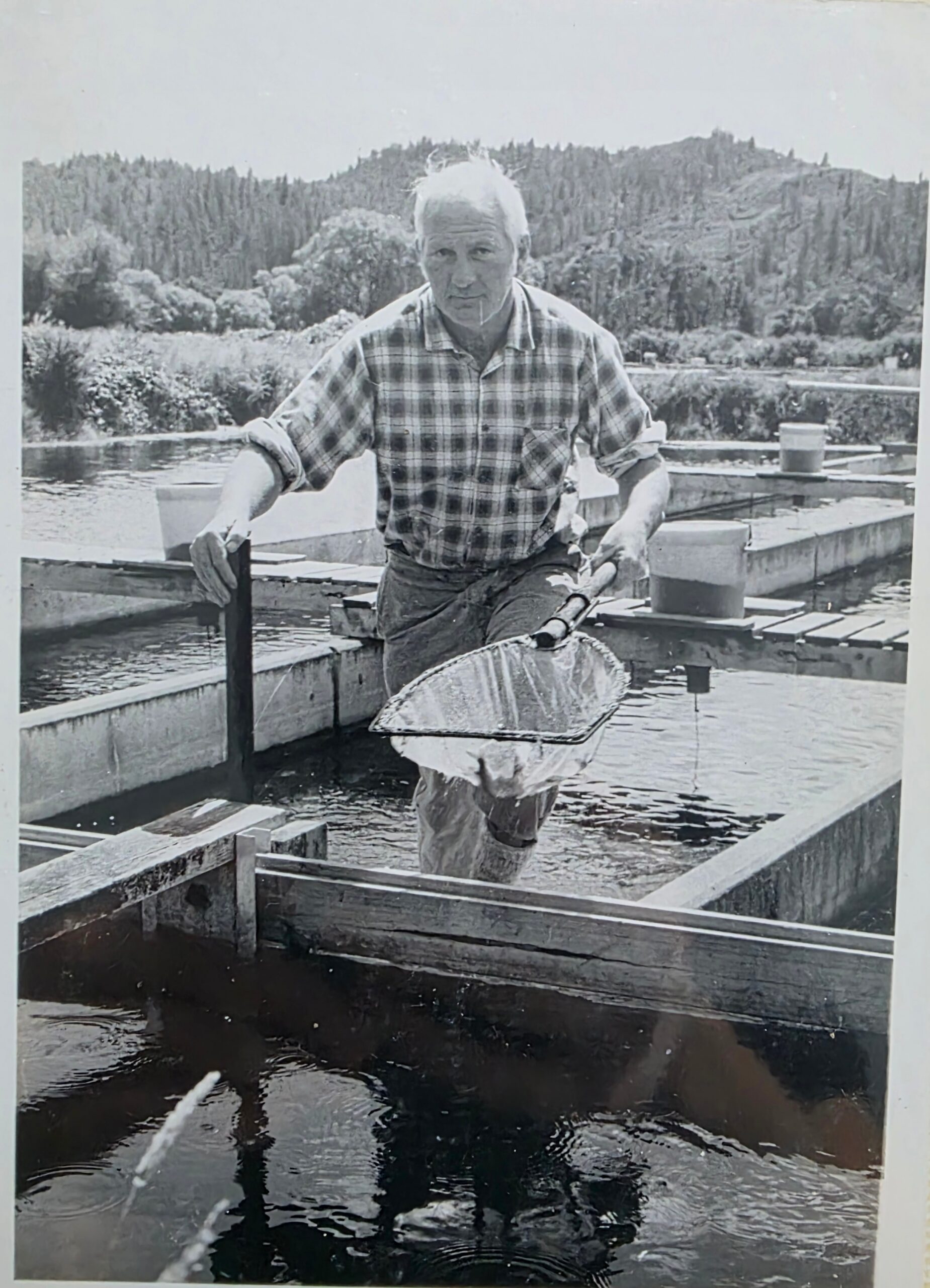
Image – Clive Barker netting salmon at Tākaka in 1977
In the early 1970s, after learning about salmon farming developments in Norway and North America, Clive recognised that New Zealand had the natural conditions to successfully farm king salmon. The constant flow of cool, clear water from Te Waikoropupū Springs convinced him that Tākaka could become the centre of a new industry.
In 1973, he applied for licences to farm trout and salmon. While the trout application was unsuccessful, he was granted permission to establish experimental salmon ponds and, in 1978, New Zealand’s first commercial licence to farm king salmon.
Starting from scratch
The early operation was built through determination, practical problem-solving and a willingness to learn.
Clive travelled to the United States to study salmon farming techniques, fish nutrition and feed manufacturing before returning to New Zealand to apply those learnings at Tākaka.
Starting from scratch meant establishing the original water race, developing a dry salmon feed, testing fish transport methods, and working through the practical challenges of establishing a completely new farming system. These trials took place despite considerable scepticism about whether commercial salmon farming could succeed in New Zealand. Tākaka became New Zealand’s first commercially licensed king salmon farm.
A turning point for the industry
One of the most significant milestones came in 1981, when captive-grown king salmon broodstock were successfully spawned at Tākaka.
Looking back, Clive described this as the moment when “salmon farming was assured of a future in New Zealand.”
The achievement meant the industry could establish its own breeding programme rather than relying on wild fish. In the years that followed, emerging salmon farming companies travelled to Tākaka to obtain eggs from Clive’s broodstock, helping support the development of commercial king salmon farming around the country.
A site that continues to evolve
Over the decades, the Tākaka hatchery has continued to evolve through new ownership, investment and advances in aquaculture science before becoming part of the New Zealand King Salmon Co. Ltd in 1996.
Today, the hatchery plays a critical role in producing broodstock, eggs and smolt that support the company’s farming operations across the top of the South Island. While the facilities have changed considerably since the 1970s, the site’s importance to the industry remains as strong as ever.
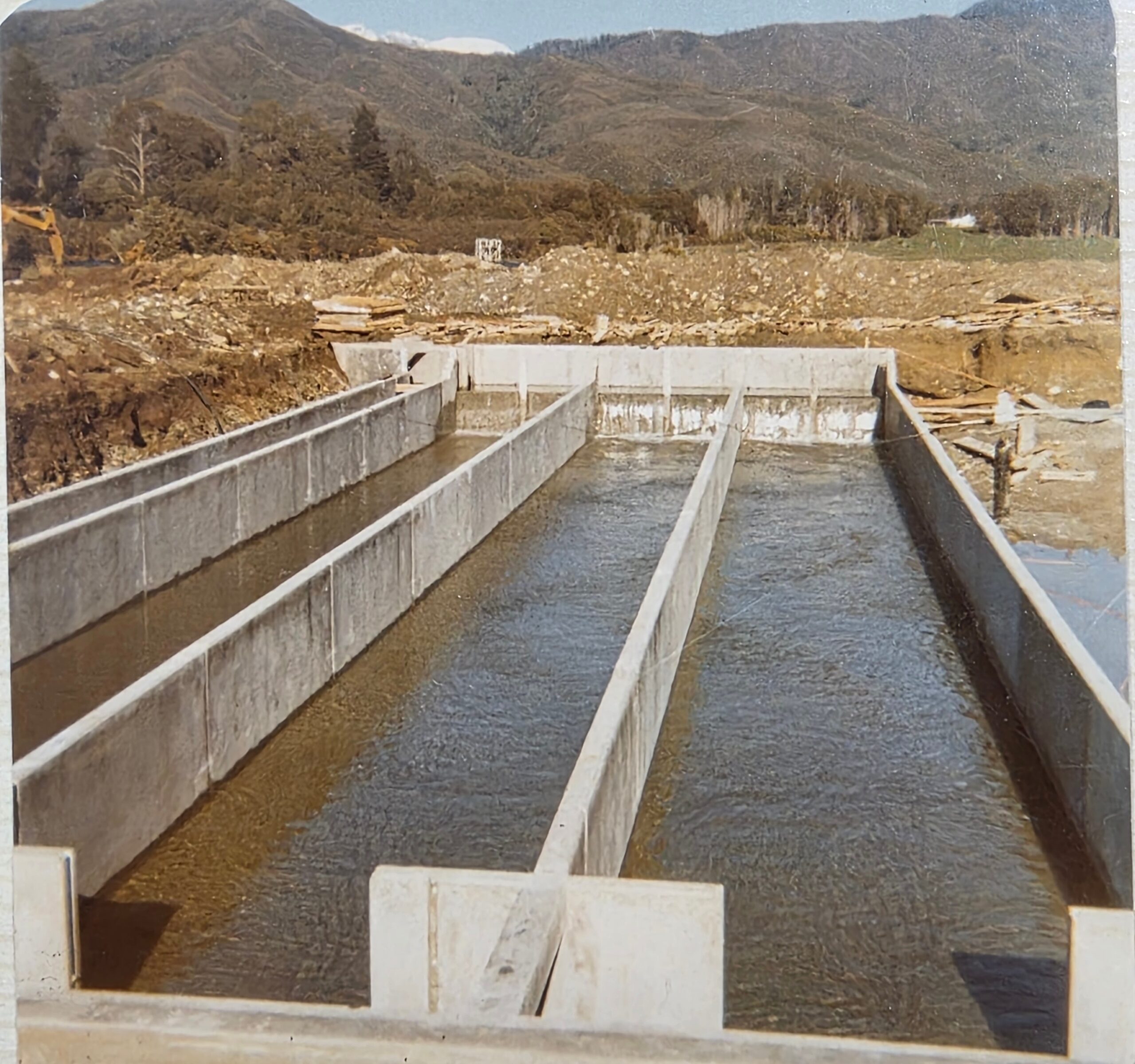
Image – The Tākaka raceways in 1977
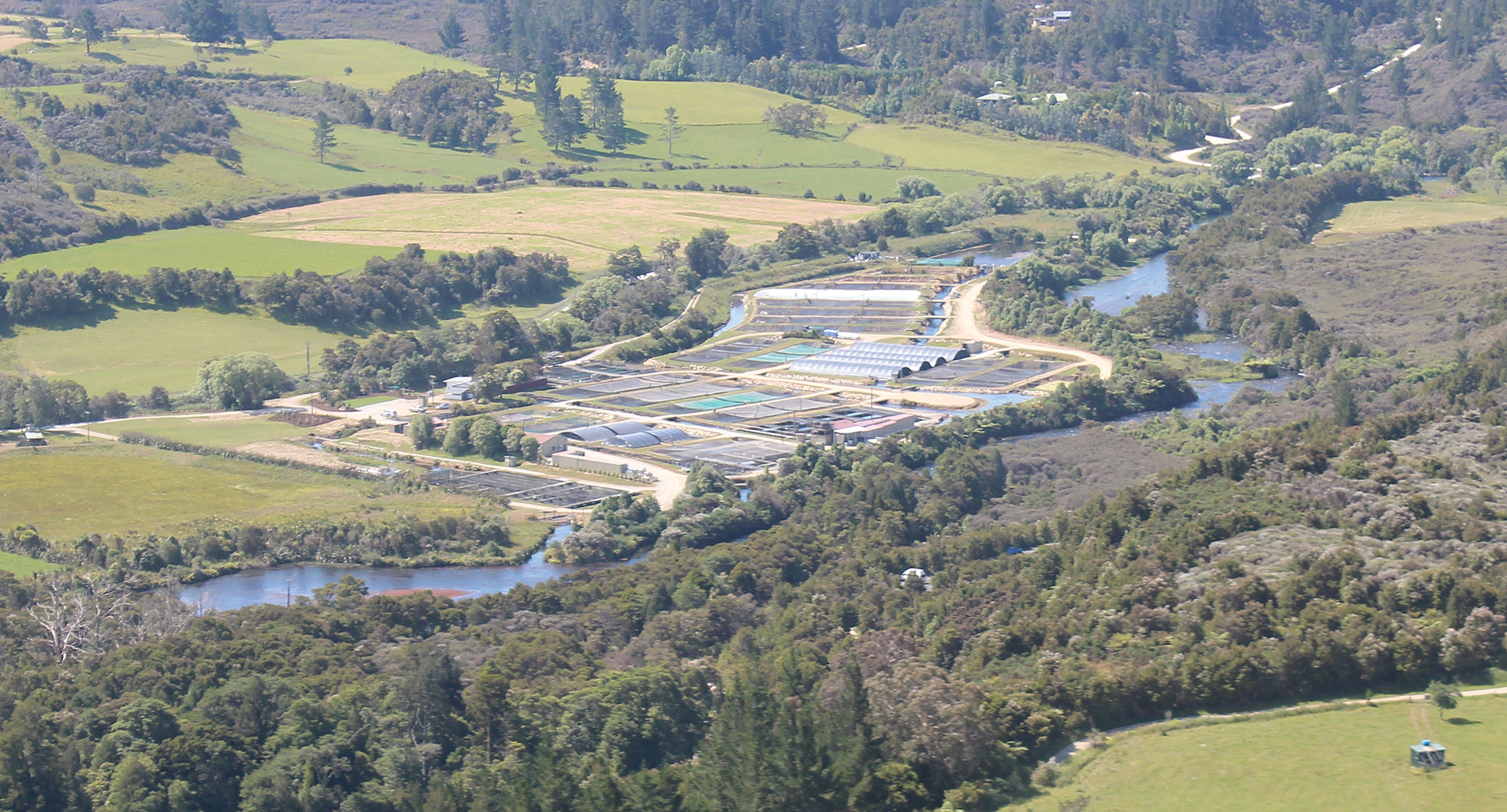
Image – An aerial view of the Tākaka hatchery, taken in 2017
Innovation as a constant
Although salmon farming has changed significantly over the past five decades, one characteristic has remained consistent: a willingness to test new ideas and build knowledge through experience.
Clive’s work at Tākaka challenged accepted thinking at the time. Rather than accepting that king salmon farming could not be established in New Zealand, he looked for practical solutions, sought expertise from overseas and adapted those ideas to local conditions.
That approach continues to influence New Zealand King Salmon today.
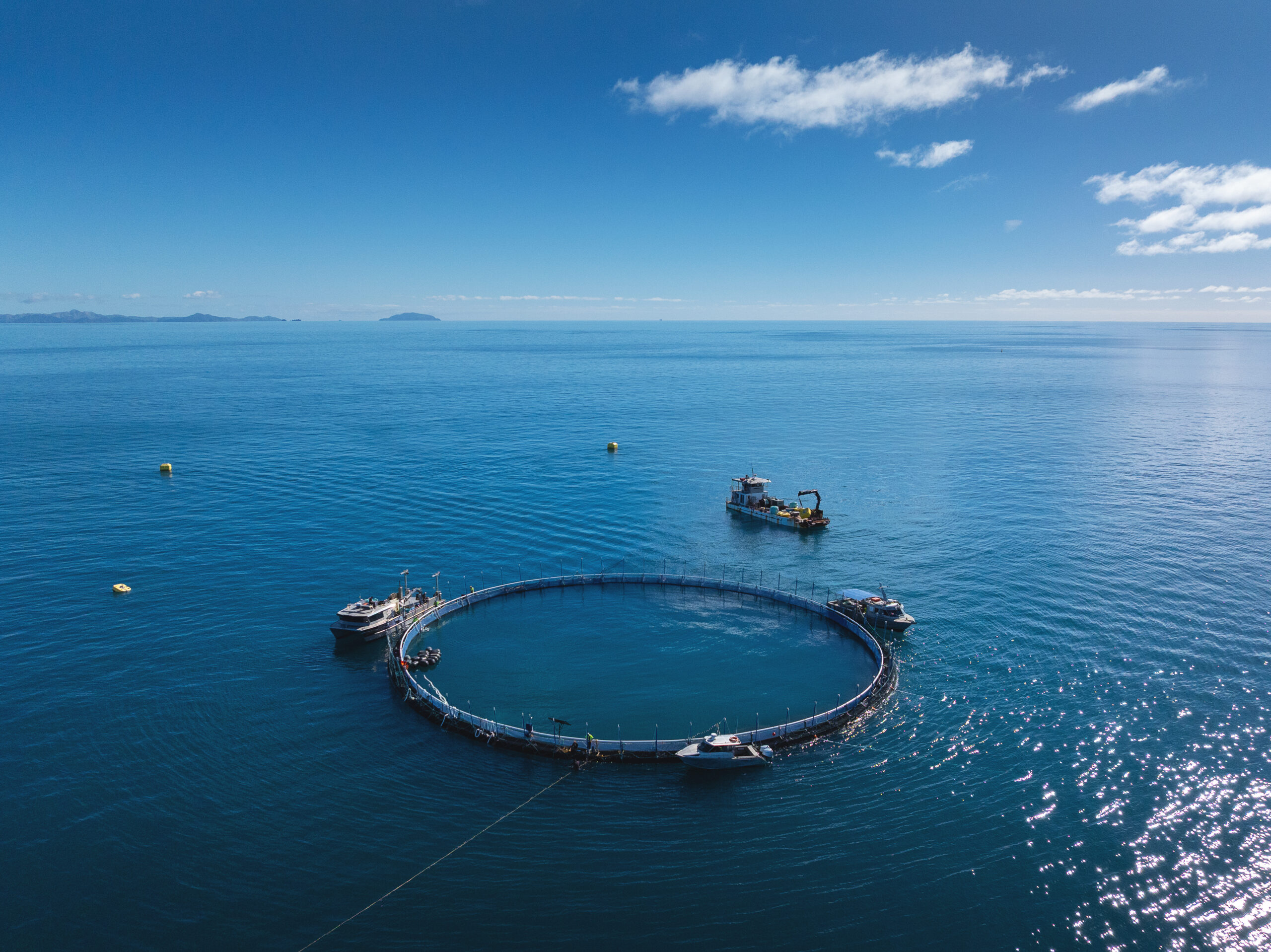
Image – NZKS now trialling sea pens in the open ocean
Projects such as Blue Endeavour reflect the same commitment to carefully evaluating new technologies and farming methods that can strengthen the long-term future of king salmon farming. While offshore farming is very different from the freshwater experiments of the 1970s, both represent a commitment to innovation, informed by science and a willingness to explore new possibilities responsibly.
Recognising an important contribution
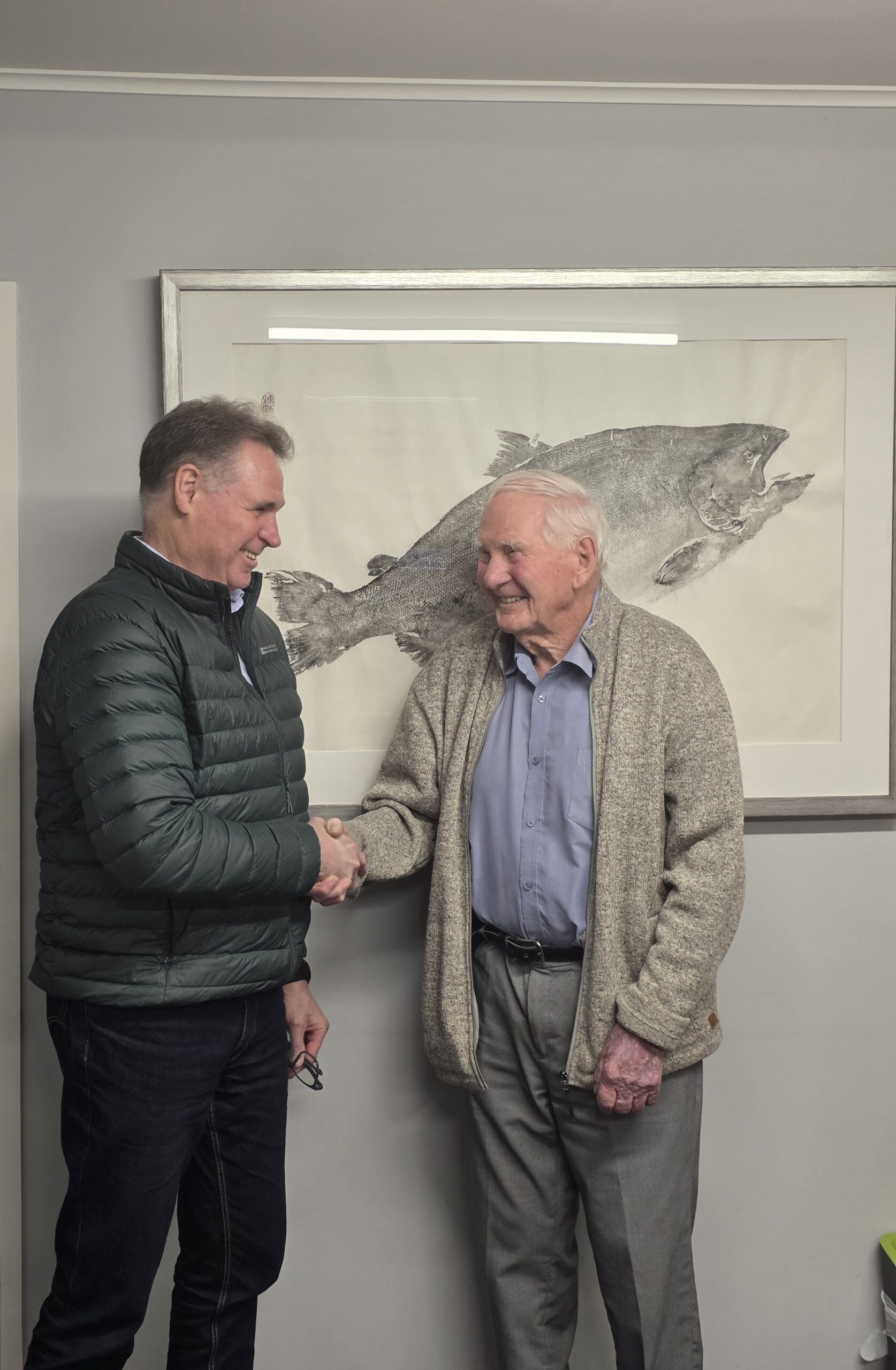
Image – NZKS CEO Carl Carrington meeting Clive Barker
This year, Clive celebrates his 90th birthday, and it’s only fitting that New Zealand King Salmon features on the menu. After all, without the foresight and ambition of pioneers like Clive, we would not even have a king salmon industry in New Zealand. This is a small way of recognising someone whose work helped establish the foundations of New Zealand’s commercial king salmon industry.
As we continue to invest in the future of salmon farming, it’s important to acknowledge those like Clive who laid the groundwork.
Clive’s vision helped demonstrate what was possible, and his story and attitude are a reminder to our salmon industry to lead boldly and continue to innovate. To seek progress over perfection, and most importantly, to have the courage to try.
ENDS